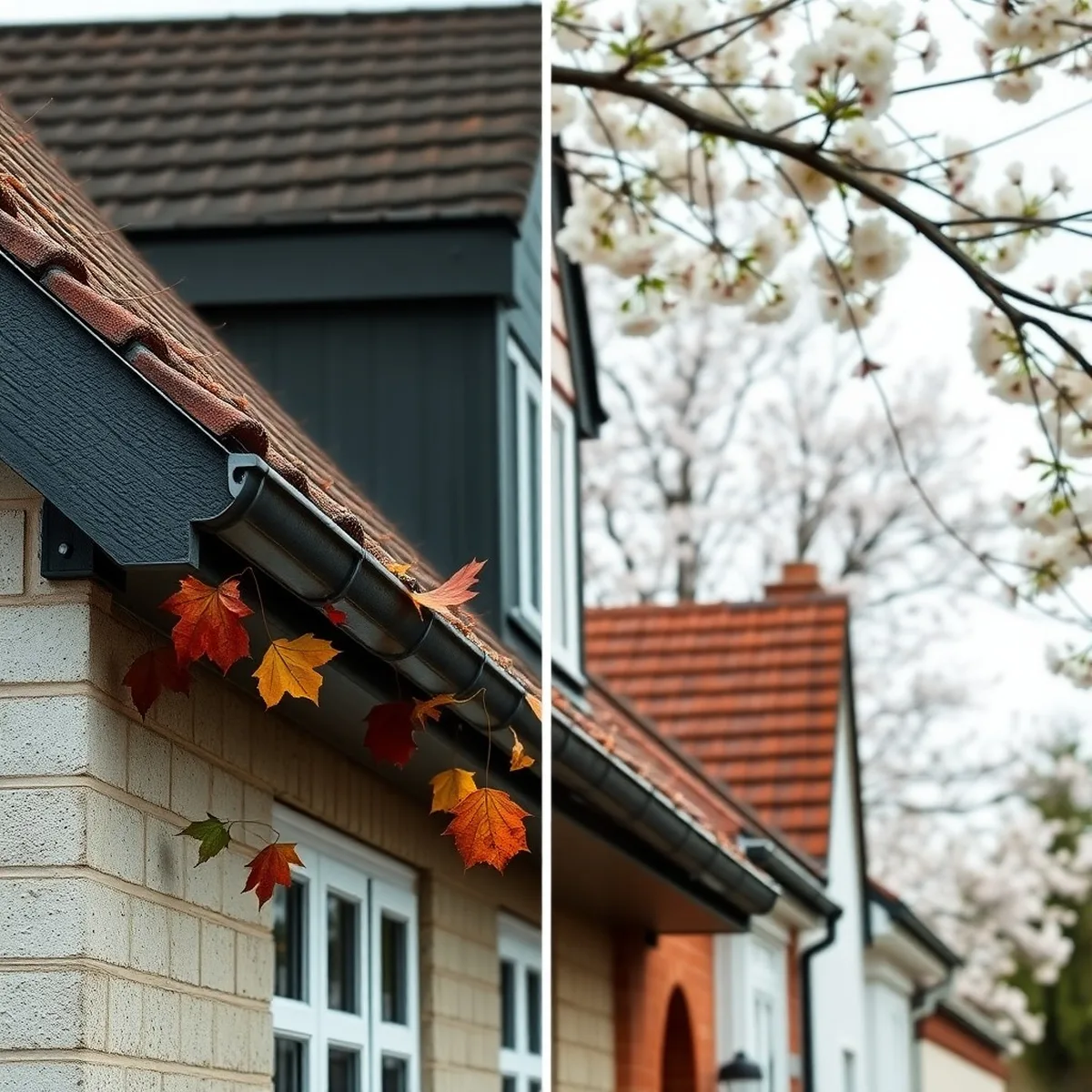
The best time to clean gutters in the UK is late autumn, once the majority of leaves have fallen — typically mid-November in the London area. Early spring is the second-best window, clearing winter moss and storm debris before the year moves on. If you clean twice a year, those two slots together cover almost everything the British climate throws at your guttering.
Timing matters more than most homeowners realise. A clean booked a few weeks too early can be undone by a single windy weekend, while a clean booked too late means blocked gutters sit through the wettest months of the year. Here’s the seasonal logic in full.
Why Late Autumn Is the Best Slot
Autumn is when gutters take their heaviest load. The mature street trees found across West London — planes, oaks, and limes — drop substantial leaf matter between October and November, and much of it lands directly in the gutter channel. Because wet leaves compact quickly into a dense, water-holding mat, an autumn accumulation left in place becomes a dam by December.
The key is to wait until the drop is mostly finished. Book too early — say, early October — and a second wave of leaves lands straight into your freshly cleared gutters. Therefore, the sweet spot is late in the season: the trees are bare, the debris is all down, and the clean carries your gutters through winter.
That winter timing is the real point. Winter brings the UK’s most persistent rainfall, and it’s also when standing water in a blocked gutter can freeze, expand, and stress joints and brackets. Going into winter with clear, free-flowing gutters is the single most protective thing the calendar offers.
Why Early Spring Is the Second-Best Time
Spring cleaning — March to April — deals with everything winter leaves behind. Storms strip moss off roofs and wash it into the gutters, silt builds up from months of heavy rain, and twigs and debris blow in on winter winds. Additionally, spring is when birds look for nesting sites, and a gutter full of soft debris is an open invitation.
For homes with significant tree cover, spring isn’t an alternative to the autumn clean — it’s the partner to it. An autumn-plus-spring schedule keeps the system clear year-round. For homes with little or no tree cover, a single annual clean is often enough, and if you’re choosing just one slot, late autumn wins. Our guide on how often gutters should be cleaned walks through choosing the right frequency for your property.
A Season-by-Season Breakdown
Autumn (October–November)
The main event. Wait until most leaves are down — typically mid-November around London — then book the clean. This is the highest-value clean of the year because it protects the system through winter.
Winter (December–February)
Not a cleaning season, but a watching one. If you see icicles forming at gutter level or water overflowing during rain, you likely have a blockage that shouldn’t wait until spring. Vacuum-based cleaning can still go ahead in winter, weather permitting.
Spring (March–April)
The second clean. Clears winter moss, silt, and storm debris, and catches any faults winter has caused — failed joints, loose brackets — while they’re still minor.
Summer (June–August)
A low-debris season, but worth a visual check after heavy storms, since summer deluges can dislodge and compact debris in downpipes. Summer is also a practical time to book: demand is lower, access is easier, and any repairs identified can be done in dry weather.
Why Timing Matters More Than It Seems
A gutter clean isn’t just a tidy-up — it’s timed protection. The damage from blocked gutters comes from repetition: water overflowing down the same stretch of wall through week after week of rain. Consequently, the worst possible pattern is gutters that block in November and stay blocked until a spring clean, because that’s precisely the period of maximum rainfall.
That’s also why the popular slots fill quickly. Across Uxbridge, Harrow, and the surrounding tree-lined areas, November is the busiest month of the year for gutter work. Booking your gutter cleaning ahead of the rush — rather than after the first overflow — means you get the timing right instead of joining a queue mid-crisis. We offer same-week appointments and free written quotes, and every job comes with before-and-after photos so you have a dated record for next year’s planning.
Frequently Asked Questions
What is the best month to clean gutters in the UK?
November, in most of the country. By mid-November around London the majority of leaves have fallen, so a clean at that point clears the full autumn load and sends the gutters into winter free-flowing. March or April is the best second slot.
Is it too late to clean gutters in winter?
No. Vacuum-based cleaning can be carried out through winter, weather permitting, and a blocked gutter in December should not wait until spring. However, planning ahead for a late-autumn clean avoids the problem arising at all.
Should gutters be cleaned before or after autumn leaves fall?
After. Cleaning before leaf fall means the new season’s leaves land in a freshly cleared channel and undo the work within weeks. Wait until the nearby trees are mostly bare, then book the clean.
Do gutters really need cleaning twice a year?
Only some do. Homes near mature or overhanging trees benefit from an autumn and a spring clean, because a single autumn can fill a gutter run. Homes with little tree cover are usually fine with one annual clean in late autumn.
Want your gutters cleared at exactly the right time this year? Send us your details through our free quote form for a written, no-obligation quote — we respond within 2 hours during business hours and serve Uxbridge, Harrow, Hayes, Hillingdon, Slough, Southall, West Drayton, and Windsor.
Related reading: How Often Should Gutters Be Cleaned? | 7 Warning Signs Your Gutters Desperately Need Cleaning
Tags:
Related Articles
Autumn Gutter Cleaning Checklist
A practical autumn gutter checklist for UK homes: check for leaf build-up, test downpipes, inspect fascias and book a clean before winter rain arrives.
Read more Tips & AdviceHow to Prepare for a Gutter Cleaning Visit
Do you need to be home for a gutter clean? Usually not. Here's how to prepare — access, parking, garden furniture — and what happens on the day itself.
Read more