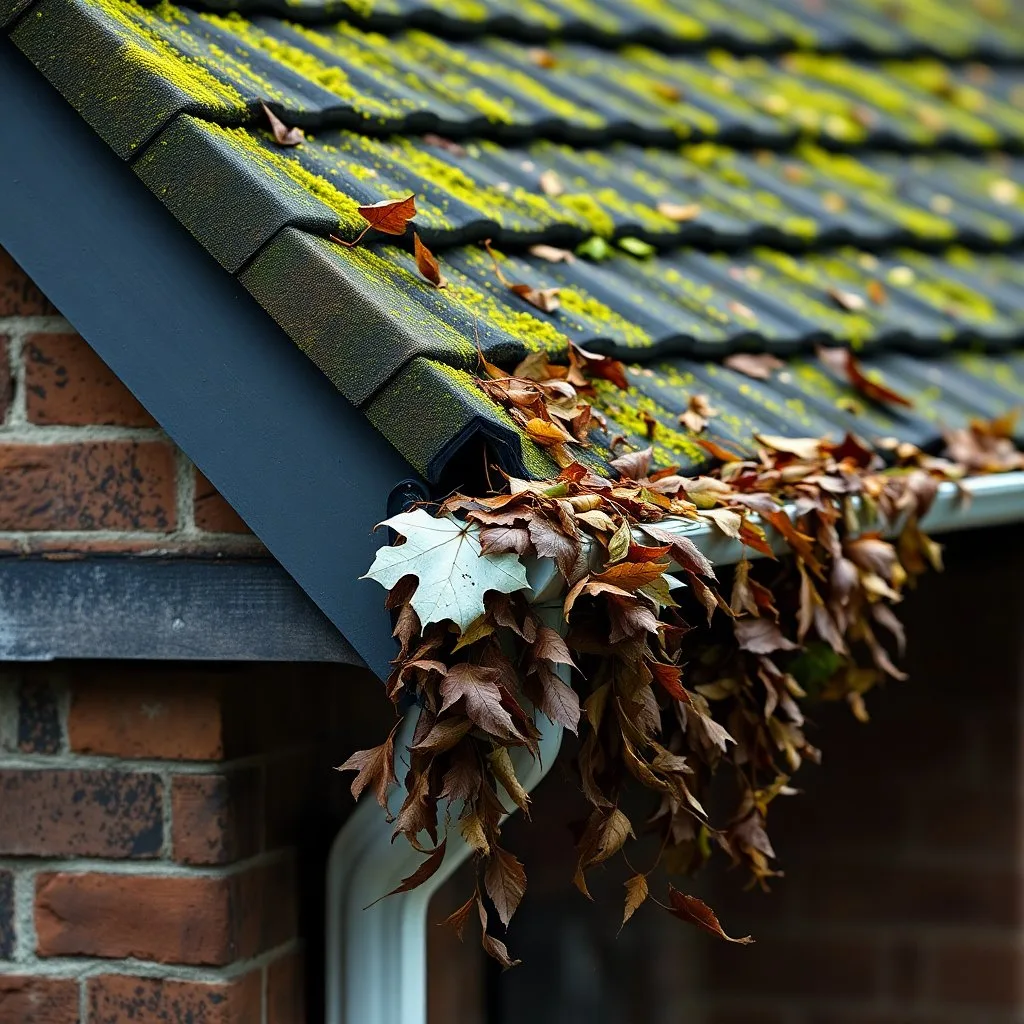
Most homeowners don’t think about their gutters until something goes wrong. By that point, water may already be seeping into walls, staining ceilings, or eroding the foundations. The good news: gutters give plenty of warning before they cause serious damage — if you know what to look for.
Here are the 7 warning signs your gutters desperately need cleaning, and what happens if you ignore them. Because gutter problems tend to escalate quietly, catching these signs early can save you thousands in repairs later.
1. Water Overflowing Over the Gutter Edge During Rain
This is the most obvious sign, and the one homeowners most often dismiss as “just a bit of rain.” However, if water is cascading over the front of your gutters rather than flowing down the downpipe, your gutters are blocked.
What’s likely happening is that compressed leaf matter, moss, and silt have formed a dam inside the gutter channel. Since the water has nowhere else to go, it takes the path of least resistance — over the edge and straight down your exterior wall.
Why it matters: Water running down your exterior wall repeatedly will penetrate the brickwork and cause damp internally. You may not see the damage for weeks or months, but it’s happening.
2. Plants or Moss Growing in the Gutters
If you can see greenery sprouting from your gutters — grass, weeds, moss, or even small saplings — that’s a clear sign. It means debris has been sitting undisturbed long enough to become a growing medium.
Moss is particularly problematic in West London because it retains moisture constantly. This adds weight to your gutters and accelerates the breakdown of joints and seals. Once moss establishes itself, it spreads rapidly.
Why it matters: Moss-laden gutters can weigh significantly more than their designed load, causing brackets to pull away from the fascia board. As a result, replacement costs far exceed the cost of regular cleaning.
3. Stains or Marks on Your Exterior Walls
Look at the area directly below your gutters. Dark streaks, green algae staining, or damp patches on the brickwork or render are a tell-tale sign. They indicate that water has been overflowing for some time.
In older properties with solid brick construction — common across Uxbridge, Harrow, and Hayes — the brickwork is particularly vulnerable to water ingress because there’s no cavity wall insulation to act as a barrier.
Why it matters: Once water penetrates solid brickwork, it migrates inward. Therefore, damp patches on interior walls are often the downstream result of blocked gutters that have been ignored for too long.
4. Sagging or Pulling-Away Gutters
Stand back and look at your gutters from the pavement. They should form a neat, straight line with a very slight fall toward the downpipe. If sections are visibly sagging, bowing downward, or pulling away from the fascia, the weight of accumulated debris is pulling them out of position, compounded further by standing water.
As a result, this stresses the joints between gutter sections over time, causing leaks at the connections.
Why it matters: A sagging gutter cannot drain properly, even if partially cleared. Consequently, the low point becomes a reservoir for standing water, which breeds mosquitoes in summer and creates ice-dam problems in winter.
5. Damp or Water Stains Inside Your Home
Damp on interior walls or ceilings near the roofline is sometimes incorrectly diagnosed as a roof leak, when the real culprit is blocked gutters. If overflowing water runs behind the fascia board and soaks the wall plate, it can appear internally as rising or penetrating damp.
Check your loft space too — damp felt on the underside of roof tiles near the eaves can indicate water is backing up under the tiles because of blocked gutters.
Why it matters: Misdiagnosis means expensive damp-proofing treatments that don’t solve the root cause. Therefore, before spending money on damp remediation, always check and clear the gutters first.
6. You Haven’t Had Them Cleaned in Over a Year
If you genuinely can’t remember when your gutters were last cleaned, or you’ve moved into a property and don’t know the history, assume they need attention.
In West London, most properties are surrounded by mature trees — London planes, oaks, and limes — that drop significant leaf matter each autumn. Since the local area has such heavy tree cover, a year’s accumulation can be substantial.
Why it matters: Prevention is always cheaper than cure. A routine clean costs £89–£180 for most properties, whereas the damp repairs, fascia replacements, and structural work that follow years of neglect can run into thousands.
7. Pests or Birds Near the Roofline
Gutters packed with damp, decomposing organic matter are an attractive nesting site for birds, mice, and insects. If you notice unusual bird activity near your gutters in spring, or signs of rodent activity in your loft, a blocked gutter full of nesting material may be the culprit.
Standing water in gutters also attracts mosquitoes during warmer months, and this is a growing issue in South-East England as summers become warmer.
Why it matters: Pest infestations are costly to treat and distressing for families. Since clearing gutters removes the habitat that attracts unwanted visitors, it’s a simple way to prevent the problem before it starts.
What Happens If You Ignore These Signs?
Here’s the honest progression of untreated blocked gutters:
- Months 1–3: Overflow stains the fascia board. Minor issue.
- Months 3–6: Water penetrates the wall regularly. Damp patches begin forming internally.
- 6–12 months: Fascia boards soften and rot. Gutter brackets pull loose. Moss establishes heavily.
- 1–2 years: Structural damp sets in. Plaster crumbles. Mould appears. Fascia replacement required.
- 2+ years: Potential foundation issues from prolonged water saturation near the building base.
Compare a £130 gutter clean today against a £4,000+ damp remediation and fascia replacement job in two years. The maths are straightforward.
Seasonal Gutter Maintenance Tips for West London Homeowners
- Autumn (Oct–Nov): Book a clean after the majority of leaves have fallen — typically mid-November in the London area.
- Spring (Mar–Apr): Clear winter moss and any debris that has built up over the wetter months.
- Summer: Check downpipes after heavy storm events — summer deluges can dislodge and compact debris.
- Winter: If you notice icicles forming at gutter level, you may have standing water that is freezing — a sign of a partial blockage.
If you have mature trees within 10 metres of your property — very common in Uxbridge, Hillingdon, and Harrow — consider booking three cleans per year instead. The extra midsummer visit catches any spring debris the earlier cleans missed.
When to Call a Professional
All 7 of these signs warrant a professional inspection. In particular, warning signs 3 and 5, or any structural issue like sign 4, mean you should call sooner rather than later.
Our team covers Uxbridge, Harrow, Hayes, Hillingdon, Slough, Southall, West Drayton, and Windsor. We offer same-week appointments, and we provide before/after photos with every job.
Get a free, no-obligation quote — we’ll respond within 2 hours during business hours.
Related reading: How Much Does Gutter Cleaning Cost in London? (2026 Price Guide) | Can Blocked Gutters Really Cause Damp?
Tags:
Related Articles
Autumn Gutter Cleaning Checklist
A practical autumn gutter checklist for UK homes: check for leaf build-up, test downpipes, inspect fascias and book a clean before winter rain arrives.
Read more Tips & AdviceThe Best Time to Clean Gutters in the UK
Late autumn, after the leaves have fallen, is the best time to clean gutters in the UK — with early spring a close second. Here's why the timing matters.
Read more