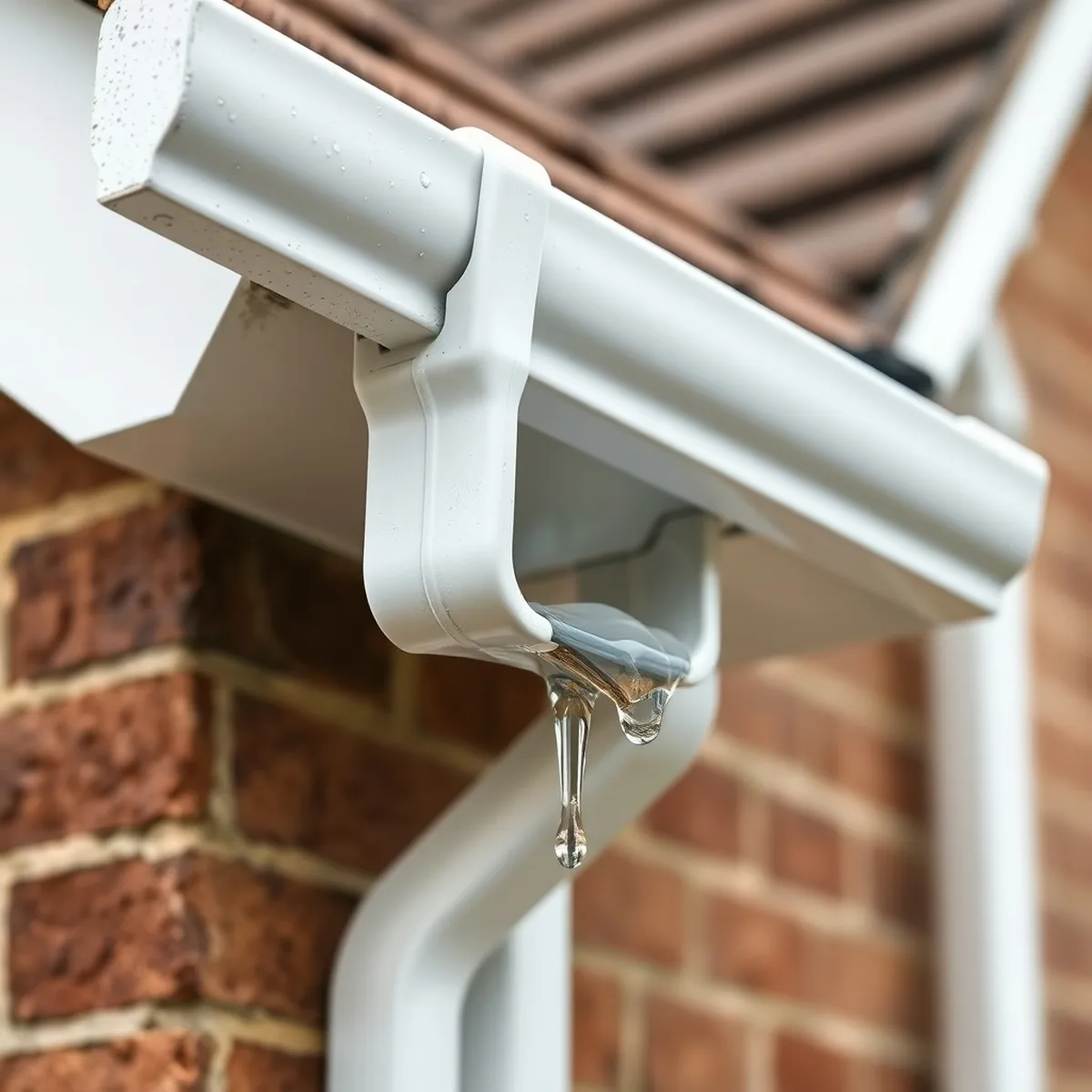
You can spot a sagging gutter from the pavement in under a minute. Stand back from your house and sight along the gutter line: it should form a neat, straight run with a very slight fall towards the downpipe. Any visible dip, bow, or gap between the gutter and the fascia board means the system is sagging — and the earlier you catch it, the cheaper the fix.
Because a sag develops gradually, most homeowners only notice once water starts pouring over the edge in heavy rain. This guide shows you what to look for from the ground, what causes the problem, and why acting early saves serious money.
Five Signs of a Sagging Gutter You Can See From the Ground
1. A visible dip or bow in the gutter line
Walk to the opposite side of the road and look along the length of each gutter run. A healthy gutter reads as a clean, straight line. However, a sagging one shows a shallow curve or a distinct low point, usually midway between two brackets.
2. Water overflowing at one spot during rain
If water spills over the edge at the same place every time it rains, that point is almost certainly a low spot. Standing water collects there because the fall towards the downpipe has been lost, so the gutter overflows locally rather than draining.
3. A gap between the gutter and the fascia
Look at where the gutter meets the fascia board behind it. If the gutter has pulled away and you can see daylight or a widening gap, the brackets are failing. This is both a leak risk and a safety hazard, since the gutter can eventually separate from the house.
4. Drips from a joint after the rain has stopped
A gutter that keeps dripping long after rain has passed is holding standing water. As a result, joints sit permanently wet, seals break down faster, and leaks appear at the connections between sections.
5. Staining or algae below one section of wall
Green streaks, dark stains, or damp patches concentrated under one stretch of gutter point to repeated localised overflow. In particular, staining that sits below a visible dip confirms the sag is already causing water damage.
What Causes Gutters to Sag?
Three causes account for nearly every sagging gutter we repair.
Debris weight. Wet leaves, moss, and silt are heavy. A gutter loaded with saturated debris carries far more than its designed load, and the plastic or the brackets slowly give way under the strain. This is why sagging so often follows a long gap between cleans.
Bracket failure. Brackets anchor the gutter to the fascia. When they rust, crack, or their screws lose grip in ageing timber, the gutter drops between the remaining fixings. In West Drayton, for example, long-term vibration from Heathrow’s flight path gradually works fixings loose in dried-out softwood fascias — so we check bracket security on every visit there.
Lost pitch. Gutters are installed with a slight fall so water runs to the downpipe. Once brackets shift or timber settles, that fall disappears and water pools instead of draining. The standing water then adds weight, which makes the sag worse — a slow feedback loop that never corrects itself.
Why Catching a Sag Early Is So Much Cheaper
A sagging gutter caught early is usually a simple job: reinforce or replace a few brackets, realign the run, and restore the correct fall. Typical repairs fall within the £150–£800 range, and most are completed within 2–5 working days through our gutter repair service, backed by a 12-month workmanship guarantee.
Left alone, however, the problem compounds. Standing water stresses the joints and causes leaks. Overflow soaks the fascia board, which softens and rots, and rotten timber can no longer hold bracket screws at all. At that stage you’re often looking at widespread damage — and once sagging is persistent across multiple sections, full gutter replacement becomes the sensible option rather than piecemeal repairs.
Therefore, the maths strongly favours acting on the first sign. A few new brackets today costs a fraction of new gutter runs and fascia work in two years’ time.
A 60-Second Monthly Check
You don’t need a ladder to keep on top of this. Once a month, and always after storms:
- Sight along each gutter run from across the road, looking for dips or bows.
- During rain, watch for overflow at any single repeated spot.
- Check for gaps opening between gutter and fascia.
- Scan the wall below for new stains or green streaks.
Since all four checks happen from ground level, they take about a minute per elevation and cost nothing.
Frequently Asked Questions
What causes gutters to sag or pull away from the house?
The three main causes are the weight of accumulated wet debris, failing brackets (rusted, cracked, or with loosened screws), and lost pitch where the gutter no longer falls towards the downpipe. Often all three act together, because standing water adds weight that accelerates bracket failure.
Can a sagging gutter be fixed without replacing it?
Usually, yes. If the damage is isolated, we reinforce or replace the brackets, realign the gutter, and restore the correct fall. Replacement is only recommended when sagging is widespread and persistent or the system is over 20 years old.
How much does it cost to fix a sagging gutter?
Typical gutter repairs fall in the £150–£800 range depending on access and how many sections are affected. We provide a free assessment and a written quote before any work begins.
Is a sagging gutter urgent?
It’s worth acting promptly. A sag holds standing water, which stresses joints, causes leaks, and can rot the fascia board behind it. Early repair is straightforward; a neglected sag becomes a much larger job.
Spotted a dip in your gutter line or a gap opening at the fascia? Tell us what you’re seeing via our free quote form — we respond within 2 hours during business hours and offer same-week repair appointments across Uxbridge, Harrow, Hayes, and the wider West London area.
Related reading: Gutter Repair in West London: A Complete Guide | The Hidden Costs of Ignoring Your Gutters
Tags:
Related Articles
Autumn Gutter Cleaning Checklist
A practical autumn gutter checklist for UK homes: check for leaf build-up, test downpipes, inspect fascias and book a clean before winter rain arrives.
Read more Tips & AdviceThe Best Time to Clean Gutters in the UK
Late autumn, after the leaves have fallen, is the best time to clean gutters in the UK — with early spring a close second. Here's why the timing matters.
Read more