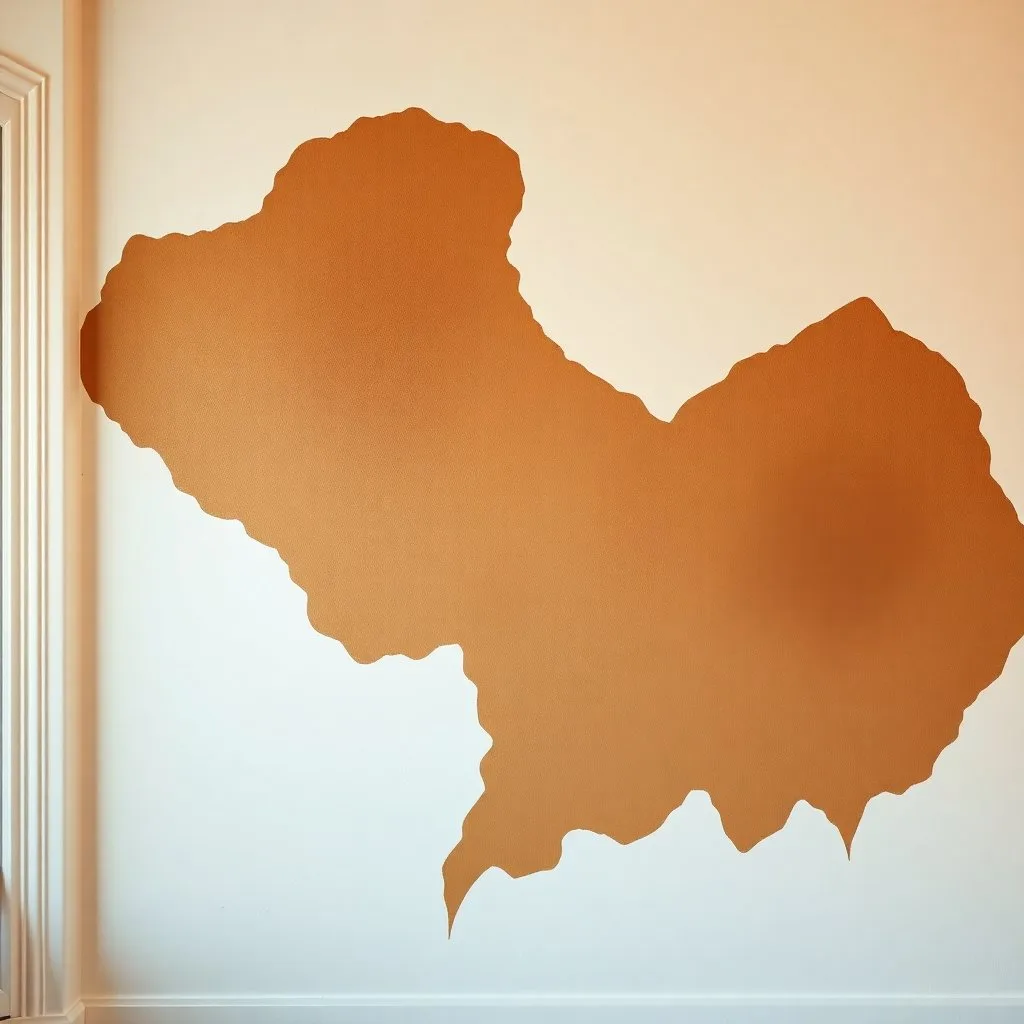
It’s a question we hear regularly from homeowners across Uxbridge and West London: “My damp specialist says I have penetrating damp — could it be my gutters?” In many cases, the answer is yes. Blocked gutters are one of the most common — and most frequently overlooked — causes of damp in UK homes.
This article explains the mechanism in plain terms, covers the types of damp that result, and tells you what to do about it. Because the cause is often invisible until damage appears indoors, it’s worth understanding the process before it reaches your walls.
How Blocked Gutters Cause Damp: The Mechanism
Your gutters exist for one purpose: to intercept rainwater at the roofline and channel it away from your building via downpipes. When they’re clear, rainwater flows off the tiles into the gutter channel and down to the drain. Your walls stay dry.
When gutters become blocked with leaves, moss, or silt, the water has nowhere to go. Here’s what happens next:
Step 1 — Overflow. Rainwater fills the gutter channel and overflows over the front edge, running down the exterior wall in sheets rather than into the downpipe.
Step 2 — Saturation. Over repeated rain events, the same section of brickwork or render is repeatedly wetted. The surface begins to absorb water rather than shedding it.
Step 3 — Ingress. Once the outer face of the wall is saturated, water begins to move inward through capillary action — particularly in older solid-brick construction common in Uxbridge, Harrow, and Hayes.
Step 4 — Interior manifestation. Damp appears inside: staining on plaster, damp patches near the ceiling or upper walls, peeling wallpaper, or visible mould.
This process can take weeks to months, depending on rainfall, wall construction, and the severity of the blockage. As a result, by the time you notice damp inside, the blockage has usually been present for some time.
Types of Damp Caused by Blocked Gutters
Penetrating Damp
This is the most common type associated with blocked gutters. It occurs when water physically penetrates through an external wall. Symptoms include:
- Damp patches that worsen after rain and dry during dry spells
- Tide marks on plaster or wallpaper
- Cold, wet patches on internal walls near the roofline
- Efflorescence (white salt deposits) on brickwork
Penetrating damp from gutters typically appears on upper walls, near bay windows, or on gable ends. Bay windows often have their own gutter sections, and downpipes are usually positioned at gable ends, so both spots are worth checking first.
Damp in the Loft Space
Overflow from gutters can run behind the fascia board and soak into the wall plate — the horizontal timber that sits at the top of the external walls and supports the roof structure. Once the wall plate becomes wet, damp spreads through the loft insulation and can cause the felt underlay beneath the tiles to degrade.
This is a common finding in older West London properties where the gutters have been neglected for several seasons. Since the wall plate is hidden from view, homeowners often don’t realise there’s a problem until the felt underlay has already begun to degrade.
Damp in Basements and Lower Floors
This is less direct but real in some cases. When gutters overflow repeatedly against a wall, the saturation can travel down the external face of the building. In properties with basements or where the ground floor slab sits close to external ground level, sustained water saturation can contribute to rising or ground-level penetrating damp.
It’s less common than upper-floor penetrating damp, however, so it’s worth considering only if you have persistent basement moisture without an obvious source.
Secondary Mould Problems
Even where structural damp hasn’t taken hold, condensation and mould can result from damp walls radiating cold. A wet external wall loses thermal performance, creating a cold surface on which interior condensation forms. Black mould in corners near the external wall — especially in bedrooms — can sometimes be traced back to long-term gutter overflow. In particular, north-facing rooms with limited airflow tend to show this problem first.
Is It Always the Gutters? Other Causes of Penetrating Damp
Blocked gutters are a common cause of penetrating damp, but not the only one. Before spending money on damp-proofing, it’s worth ruling out:
- Failed pointing — cracked or missing mortar between bricks allows water entry
- Cracked render — hairline cracks in external render are very common in older West London properties
- Defective flashing — around chimney stacks, dormers, and flat roof edges
- Damaged roof tiles — broken or slipped tiles above the affected area
- Faulty window seals — water tracking down from poorly sealed window frames
A good damp specialist will want to establish the source of ingress before recommending treatment. If they suggest expensive injection damp-proofing without first checking the gutters, fascias, and roof, get a second opinion.
The Fascia Board Problem
There’s a second mechanism by which gutters cause damp that’s easy to miss. If your gutters are overflowing or have developed a leak at a joint, water can consistently run down behind the gutter and onto the fascia board — the horizontal timber board that the gutter is mounted to.
Fascia boards are typically painted for weather resistance, but years of consistent moisture exposure will eventually cause the paint to fail. The timber then absorbs water and the board softens and rots. Once the fascia rots, it loses its ability to support the gutter bracket, causing the gutter to sag and leak further — a deteriorating cycle.
Rotting fascia boards also allow moisture into the roof structure at the eaves. This is a serious issue, although it’s entirely preventable with regular gutter maintenance.
Prevention: What You Can Do
1. Clean Gutters Twice a Year
In West London, the standard recommendation is autumn (after leaf fall, typically November) and spring (March–April to clear winter moss and debris). Because heavy tree cover accelerates blockages, properties with mature trees nearby may need an additional clean during the year.
2. Address Blockages Promptly
If you notice overflow during rain, don’t wait for the annual clean. A blockage that’s causing active overflow is actively soaking your wall, so book a prompt clearance rather than letting it continue.
3. Consider Gutter Guards
Wire mesh or foam gutter guards significantly reduce debris accumulation. They don’t eliminate the need for cleaning entirely, but they can extend the interval from twice yearly to once yearly for properties with moderate tree cover.
4. Inspect Downpipes
Downpipes can become blocked independently of the gutter channel — particularly at bends and underground connections. Therefore, a gutter that appears clear but drains slowly may actually have a downpipe blockage at ground level.
5. Check Joints and Seals
Gutter sections connect via push-fit joints sealed with rubber gaskets, and these deteriorate over time. Leaks often begin along the back of the gutter toward the fascia rather than at the joint face itself, which makes them easy to miss. For this reason, ask your gutter cleaning company to inspect joints during their visit.
When to Call a Professional
Call a gutter cleaning professional if:
- You can see overflow during rain
- You notice plants, moss, or debris visible from the ground
- There are stains on your exterior walls below the gutter line
- You have unexplained damp patches on upper internal walls
- Your gutters are sagging or visibly pulling away from the fascia
Our team serves Uxbridge, Harrow, Hayes, Hillingdon, Slough, Southall, West Drayton, and Windsor. Every job includes before/after photos and a condition report, since transparency matters when you can’t see the gutters yourself. If we identify issues beyond routine cleaning — damaged joints, rotting fascia, downpipe blockages — we’ll advise you clearly on the options.
Get a free quote today — we respond within 2 hours during business hours (Mon–Fri, 8am–6pm).
Related reading: 7 Warning Signs Your Gutters Desperately Need Cleaning | How Much Does Gutter Cleaning Cost in London?
Tags:
Related Articles
Autumn Gutter Cleaning Checklist
A practical autumn gutter checklist for UK homes: check for leaf build-up, test downpipes, inspect fascias and book a clean before winter rain arrives.
Read more Tips & AdviceThe Best Time to Clean Gutters in the UK
Late autumn, after the leaves have fallen, is the best time to clean gutters in the UK — with early spring a close second. Here's why the timing matters.
Read more