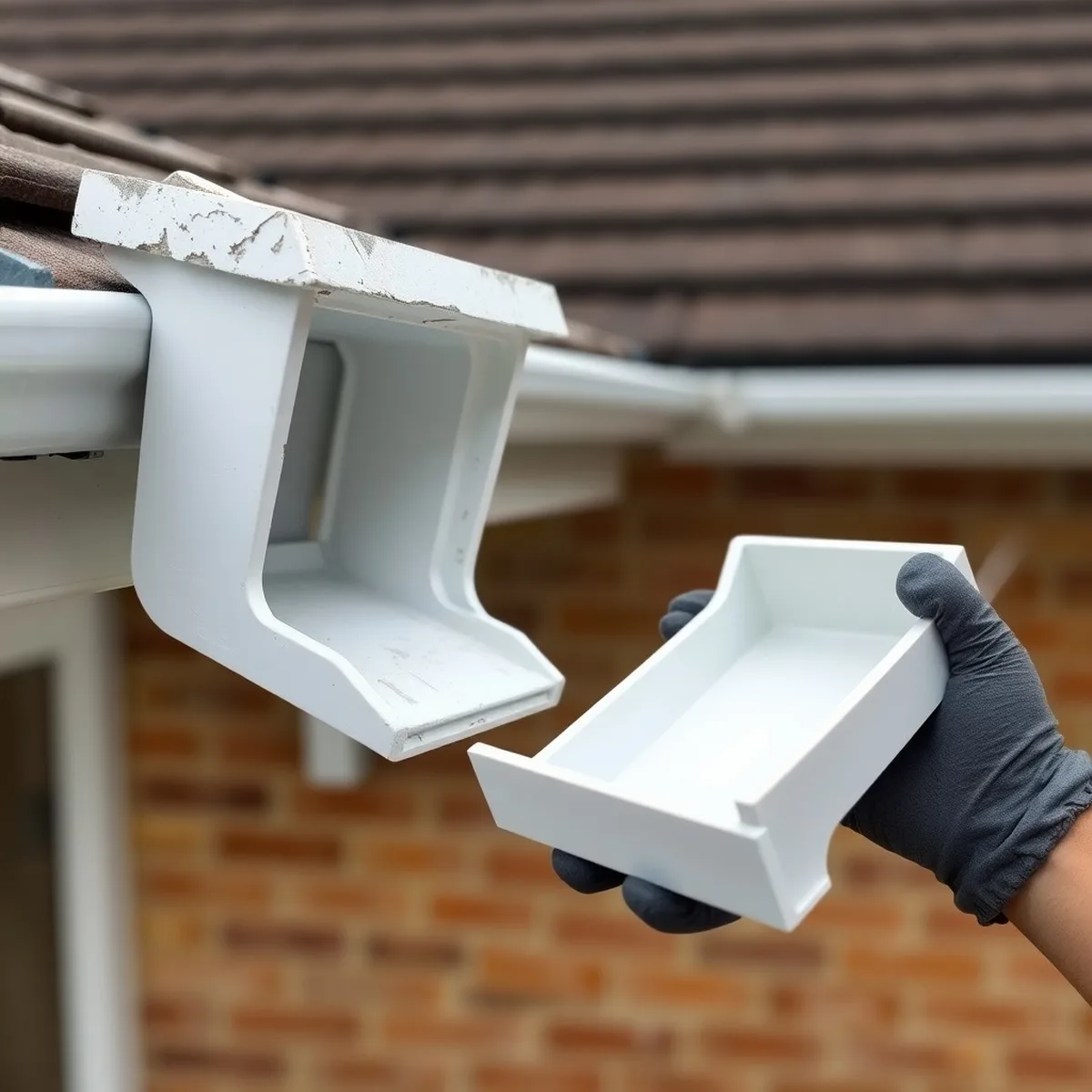
uPVC gutters typically last 25–40 years in the UK. A well-fitted, regularly cleaned system will sit at the top of that range, while a neglected one exposed to heavy sun and standing water can fail well before its time. Because so much of West London’s housing was fitted with uPVC decades ago, many local systems are now approaching — or past — the end of their working life.
This guide explains what actually ages plastic guttering, the signs that replacement is due, and the simple habits that add years to a system’s life.
What Ages uPVC Guttering?
uPVC doesn’t rust, which is why it replaced cast iron so widely from the 1970s onwards. However, it degrades in its own slower, quieter ways. Three processes do most of the damage.
1. UV Brittleness
Decades of sunlight gradually break down the plasticisers that keep uPVC flexible. As a result, old gutters turn pale and chalky, and eventually crack under light pressure — sometimes from nothing more than a ladder resting against them or a heavy frost.
This is the single biggest reason old plastic gutters reach the point of no return. Once brittleness spreads through the whole run, patching one section simply moves the problem along to the next.
2. Thermal Cycling
uPVC expands in summer heat and contracts in winter cold, day after day, year after year. Over time this constant movement works joints loose and hardens the rubber seals inside union pieces. Consequently, the first symptom most homeowners notice is a drip from a joint during heavy rain — not a crack in the gutter itself.
3. Bracket and Fixing Corrosion
The gutter may be plastic, but the screws holding its brackets to the fascia board are steel. Since those fixings corrode over decades, brackets gradually lose their grip. The gutter then sags between supports, loses its drainage pitch, and starts holding standing water — which adds weight and accelerates every other problem.
We see this pattern constantly in Hayes, where post-war homes received uPVC guttering during the 1970s boom. Those systems are now 40 to 50 years old, and the combination of UV damage, hardened seals and corroded fixings is visible on streets throughout UB3 and UB4. Our Hayes gutter cleaning page covers the local picture in more detail.
Signs Your uPVC Gutters Need Replacing
Age alone doesn’t condemn a gutter — condition does. Look for these signs that a system is due for replacement rather than repair:
- Pale, chalky plastic that cracks under light pressure. This indicates widespread brittleness, not an isolated fault.
- Leaks at multiple joints, especially ones that return after resealing.
- Sagging sections or gutters visibly pulling away from the fascia at the brackets.
- Frequent blockages that a clean won’t fix — often a sign the run has lost its pitch and traps debris.
- Visible cracks, splits or holes in more than one place.
- Gutters over 20–30 years old with any combination of the above.
One cracked joint or a single sagging bracket is usually a repair job. However, when brittleness has spread throughout the run, section-by-section repair becomes uneconomical, and full replacement is the honest recommendation.
Repair or Replace? The Practical Test
A useful rule of thumb: press gently on an inconspicuous section of gutter. Flexible plastic that springs back is generally still serviceable. Plastic that feels rigid, looks chalky, or creaks under light pressure has gone brittle — and any repair is likely to be short-lived.
Cost matters here too. A full gutter replacement on a typical semi-detached or detached home usually falls in the £400–£900 range for uPVC. Therefore, if you’re facing your third or fourth repair call-out on an ageing system, replacement often works out cheaper over even a five-year horizon — and modern deep-flow profiles handle today’s heavier rainfall events better than the original 1970s designs.
How to Get the Full 40 Years From uPVC
The gap between a 25-year lifespan and a 40-year one mostly comes down to maintenance. Three habits make the difference:
- Keep them clean. Standing water and compacted debris add weight, stress joints and hold moisture against seals. Regular professional gutter cleaning — typically once or twice a year in leafy West London — removes that load before it does damage.
- Have brackets checked. A bracket inspection takes minutes during a clean, and tightening or replacing loose fixings preserves the drainage pitch that keeps the whole system working.
- Fix small leaks promptly. A dripping joint costs little to reseal. Meanwhile, the same drip left for two winters can rot a fascia board — turning a minor repair into a much bigger job.
Frequently Asked Questions
How long do uPVC gutters last before needing replacement?
Around 25–40 years in typical UK conditions. Regular cleaning and prompt joint repairs push systems towards the upper end. Heavy sun exposure, standing water and neglected fixings pull them towards the lower end.
Can brittle uPVC gutters be repaired?
Isolated faults, yes — a cracked joint or split section can be repaired with a new union piece or splice. However, once the plastic has gone brittle throughout the run, repairs tend to fail quickly and replacement is the more economical option.
Do uPVC gutters last longer than cast iron?
No. Cast iron lasts 50+ years with maintenance, compared with 25–40 years for uPVC. The trade-off is that cast iron costs more and needs regular repainting, whereas uPVC is cheap and largely maintenance-free during its life.
How much does it cost to replace uPVC gutters?
A typical full replacement falls in the £400–£900 range for a standard semi-detached or detached property. The final figure depends on the length of the runs, the number of downpipes, and whether any fascia work is needed.
Not sure whether your gutters need a clean, a repair, or a full replacement? We’ll assess them honestly and put the answer in writing. Fill in our free quote form and we’ll respond within 2 hours during business hours, Monday to Friday — with before-and-after photos included on every job.
Related reading: The Hidden Costs of Ignoring Your Gutters | How to Spot a Sagging Gutter
Tags:
Related Articles
Autumn Gutter Cleaning Checklist
A practical autumn gutter checklist for UK homes: check for leaf build-up, test downpipes, inspect fascias and book a clean before winter rain arrives.
Read more Tips & AdviceThe Best Time to Clean Gutters in the UK
Late autumn, after the leaves have fallen, is the best time to clean gutters in the UK — with early spring a close second. Here's why the timing matters.
Read more