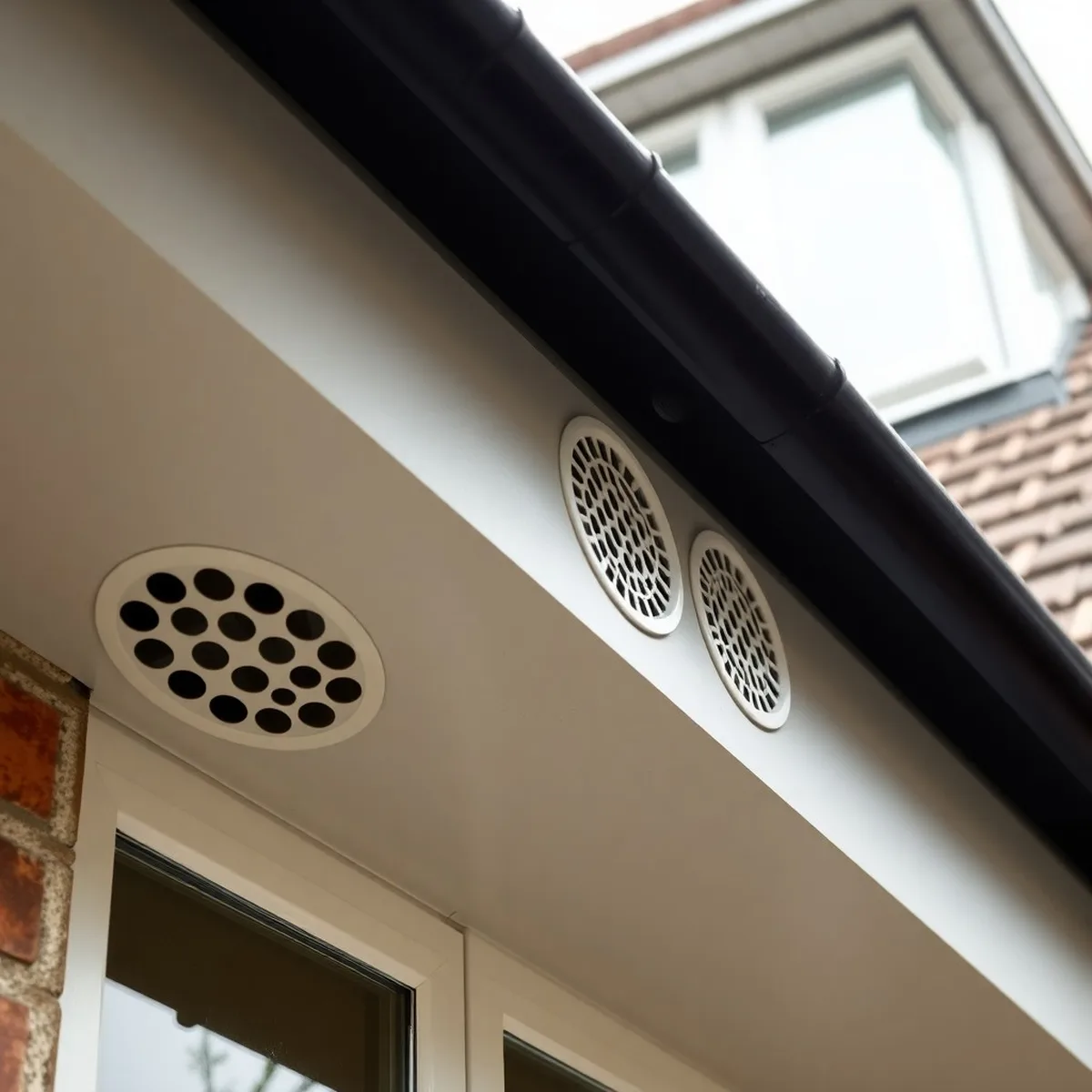
Soffit vents are the small openings in the panels under your roof overhang, and they do one simple but vital job: they let fresh air flow into the loft. That airflow carries moisture out of the roof space before it can settle as condensation. When soffits become dirty or the vents get blocked, the airflow drops — and a damp, musty loft is often the result.
In this guide, we’ll explain how soffit ventilation works, what happens when it fails, the signs of loft condensation to watch for, and when it’s worth having your soffits inspected.
How Soffit Ventilation Works
Your loft needs to breathe. Everyday life in the rooms below — cooking, showering, drying clothes, even breathing — releases warm, moist air. Some of that moisture inevitably rises into the roof space. In a well-ventilated loft, it’s carried away harmlessly. In a poorly ventilated one, it lingers.
Soffit vents sit at the lowest point of the roof space, along the eaves. Cool, dry outside air enters through these vents, moves up through the loft, and exits through vents higher up the roof — or simply circulates and dilutes the moist air. Because the soffits supply the intake, they’re the foundation of the whole airflow path. However, that also makes them the most common point of failure: they’re low, exposed, and easy to block.
What Blocks Soffit Vents?
Soffit vents are small, and it doesn’t take much to close them off. The usual culprits are:
- Dirt, dust, and organic grime building up over the vent grilles year after year
- Algae, moss, and mould growing across dirty soffit panels and creeping over the openings
- Debris from overflowing gutters washing down and collecting along the roofline
- Insect nests and cobwebs filling the vent slots
- Loft insulation pushed into the eaves from inside, covering the vent openings
Notice that most of these happen gradually. A soffit vent rarely blocks overnight; instead, airflow declines slowly over several years. Consequently, the loft’s condition worsens so gently that many homeowners never connect the damp smell upstairs with the grubby panels outside.
Can Dirty Soffits Really Cause Damp in the Loft?
Yes — indirectly but genuinely. Dirty, blocked soffits restrict the fresh-air intake that the loft depends on. With less air moving through the roof space, the moist air rising from the house has nowhere to go. When that humid air meets cold surfaces — roofing felt, rafters, the underside of tiles on a winter night — the moisture condenses into water droplets.
Over time, persistent condensation leads to damp roof timbers, wet insulation, and mould growth. Additionally, damp insulation performs worse, which cools the loft further and makes condensation even more likely. It’s a slow feedback loop, and cleaning the soffit vents is one of the simplest ways to break it.
It’s worth noting that loft damp has more than one possible cause. Blocked gutters forcing water under the roof edge produce similar symptoms, which is why our guide on whether blocked gutters cause damp pairs well with this one. A proper roofline inspection checks both.
Signs of Condensation in Your Loft
You don’t need to be a surveyor to spot the warning signs. On a cold morning, take a torch into the loft and look for:
- Water droplets or a damp sheen on the underside of the roofing felt or tiles
- Dark staining or mould spots on rafters and timbers
- Damp, compressed, or musty-smelling insulation
- A general musty odour when you open the loft hatch
- Rust spots on nail heads protruding through the felt
Meanwhile, from outside, look up at the soffits themselves. If the panels are visibly dirty, green with algae, or the vent grilles look clogged, the intake side of your loft ventilation is probably compromised. Frost or heavy condensation on loft surfaces in winter is a particularly clear signal that airflow isn’t keeping up.
When to Get Your Soffits Inspected
A few situations justify booking an inspection rather than waiting:
- You’ve noticed any of the condensation signs above. Since timber damage progresses quietly, earlier is always cheaper.
- Your soffits haven’t been cleaned in years. For most properties, professional fascia and soffit cleaning every 2–3 years is enough; homes surrounded by trees may benefit from annual attention.
- You’ve recently topped up loft insulation. Insulation pushed tight into the eaves can block vents from the inside, so it’s worth confirming the airflow path is still clear.
- Your gutters have been overflowing. Overflow washes debris down across the soffits and often signals wider roofline neglect.
A professional fascia and soffit clean deals with the outside half of the problem directly: the panels are cleaned, algae and mould are removed, and — importantly — debris and blockages are cleared from the soffit vents as part of the service. The boards and gutter joints are inspected at the same time, and you get before-and-after photos with every job, so you can see the state of your roofline without climbing a ladder.
Frequently Asked Questions
What do soffit vents do?
Soffit vents let fresh outside air into the loft at the lowest point of the roof. That airflow carries moist air out of the roof space, preventing the condensation that leads to damp timbers and mould.
Can dirty soffits cause damp in the loft?
Yes. Dirt, algae, and debris that block soffit vents restrict the loft’s air intake. With less ventilation, moisture from the house condenses on cold roof surfaces, gradually causing damp insulation, staining, and mould.
How do I know if my loft has a condensation problem?
Check the loft on a cold morning. Water droplets on the felt, mould spots on timbers, damp insulation, or a musty smell all point to condensation. Externally, clogged or heavily soiled soffit vents suggest the ventilation intake is compromised.
How often should soffits be cleaned?
Every 2–3 years suits most properties, with the vents cleared as part of the clean. Homes under heavy tree cover — common across Uxbridge, Hillingdon, and Harrow — may benefit from an annual visit instead.
Worried about a musty loft or grubby soffits? We clean and inspect fascias, soffits, and gutters across Uxbridge, Harrow, Hayes, Hillingdon, Slough, Southall, West Drayton, and Windsor. Request a free quote form — we respond within 2 hours during business hours, with same-week appointments available.
Related reading: Fascia & Soffit Cleaning: Why It Matters | Can Blocked Gutters Really Cause Damp?
Tags:
Related Articles
Autumn Gutter Cleaning Checklist
A practical autumn gutter checklist for UK homes: check for leaf build-up, test downpipes, inspect fascias and book a clean before winter rain arrives.
Read more Tips & AdviceThe Best Time to Clean Gutters in the UK
Late autumn, after the leaves have fallen, is the best time to clean gutters in the UK — with early spring a close second. Here's why the timing matters.
Read more