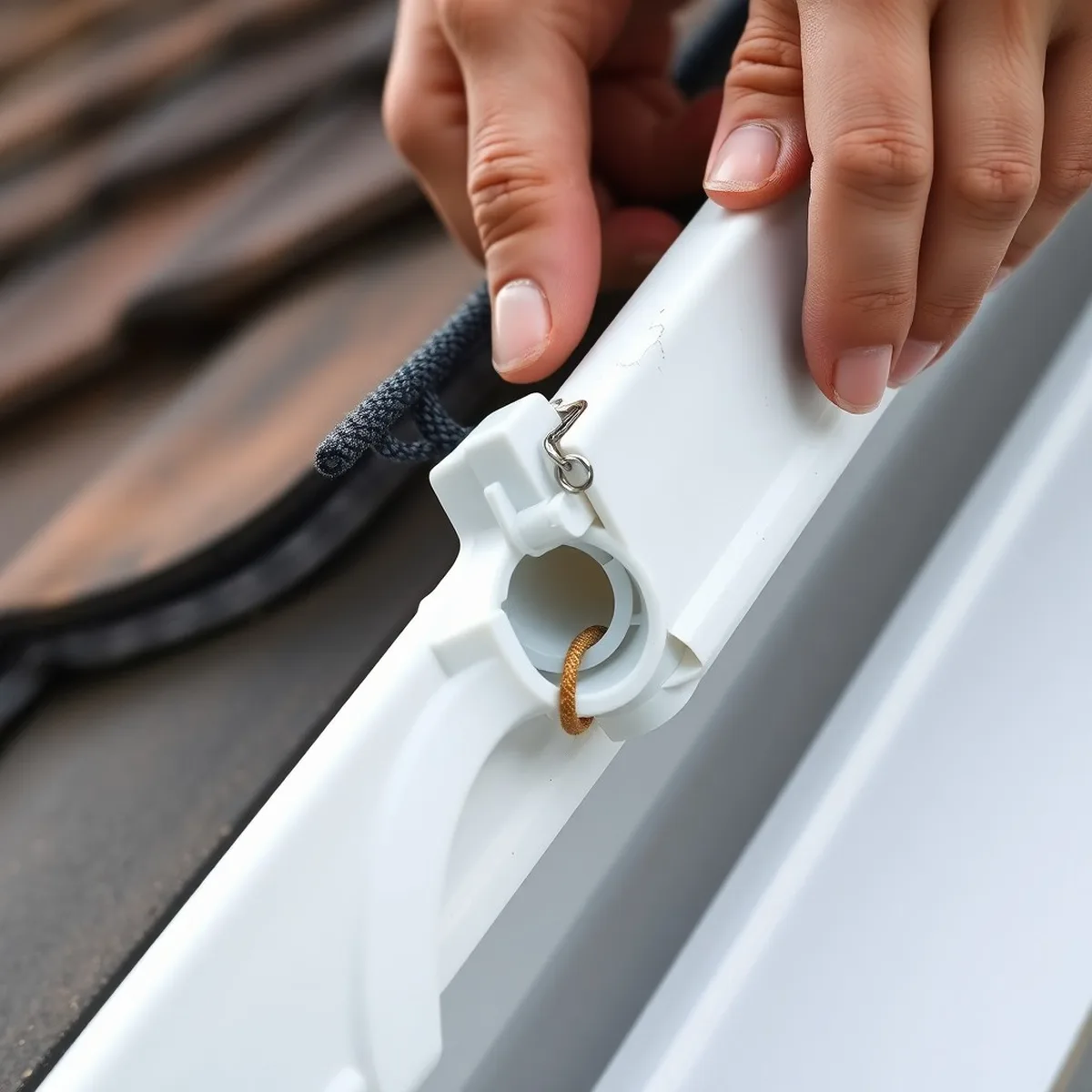
Yes — plastic guttering can usually be repaired, provided the damage is isolated. A single leaking joint, one cracked section, or a handful of failed brackets can all be fixed quickly and cheaply with new parts. However, when the uPVC itself has gone brittle throughout the run, section-by-section repair becomes uneconomical and replacement is the wiser choice.
The trick is knowing which situation you’re in. This guide explains when a plastic gutter repair works, when it doesn’t, and how to tell the difference before spending money on the wrong option.
When Plastic Guttering Can Be Repaired
Most uPVC gutter problems are local faults in an otherwise healthy system. In those cases, repair is straightforward and cost-effective.
A leaking joint
Joints between sections are the most common failure point on plastic guttering. Seals harden with age and weather, and water starts finding its way through where two lengths meet. Often the fix is simply a new union piece or fresh seal, because the surrounding gutter is still sound.
A single cracked or split section
uPVC cracks from UV exposure, temperature swings, or impact — a ladder leant in the wrong place, or a falling branch. If the crack is confined to one section, that section can be cut out and replaced. Replacement parts remain widely available for the standard 112mm half-round and square-line profiles fitted to most West London homes.
Failed brackets
Sometimes the plastic is fine but the fixings holding it up aren’t. Rusted or loosened brackets let the gutter sag and pull away from the fascia. Replacing the brackets and realigning the run restores the system without touching the guttering itself. If you’ve noticed a dip in your gutter line, our guide on how to spot a sagging gutter early covers the warning signs in detail.
For all of these, our gutter repair service typically completes the work within 2–5 working days, since we keep parts in stock for common gutter types. Every repair carries a 12-month workmanship guarantee.
When Repair Stops Making Sense
Plastic guttering has a finite life. Because uPVC becomes brittle with prolonged UV exposure and thermal cycling, systems fitted decades ago eventually degrade throughout — not just at one joint.
We see this pattern constantly in Hayes, where much of the housing was built between the 1950s and 1970s and received uPVC gutters during the 1970s and early 1980s. Those systems are now 40 to 50 years old. At that age, joints crack, brackets corrode, and entire runs lose their drainage pitch. Fixing one joint on a run like that rarely ends the story; the next weakest point fails a few months later.
As a general rule, replacement becomes the better option when:
- The gutters are over 20 years old.
- Multiple sections are damaged, not just one.
- Sagging is widespread and persistent along the run.
- You’ve had repeated repairs and leaks keep returning.
In those cases, full gutter replacement — typically £400–£900 for a standard semi or detached home — usually works out cheaper over five years than a string of individual repairs. Modern deep-flow uPVC systems also handle today’s heavier rainfall events better than the original 1970s profiles.
How to Tell If Your uPVC Has Gone Brittle
Brittle uPVC gives itself away before it fails completely. Look for these signs:
- Colour change. The plastic turns pale and chalky rather than keeping its original finish. Chalkiness is UV degradation you can see.
- Cracking under light pressure. Healthy uPVC flexes slightly; brittle uPVC cracks. If sections have snapped where a ladder touched them, the material is past its best.
- Multiple hairline cracks. One crack from an impact is bad luck. Several cracks appearing across different sections indicate the whole run has degraded.
- Failures spreading. If you fixed one joint last year and another is leaking this year, the system is telling you something.
Although these checks help, the honest answer sometimes needs eyes on the gutter itself. That’s why we assess before quoting: if a £150 repair will genuinely solve the problem, we’ll say so, and if the run is brittle throughout, we’ll explain why replacement makes better financial sense. Most jobs we look at start as repairs, and many never need replacement at all.
What a Plastic Gutter Repair Involves
A typical uPVC repair visit is simple. We inspect the full run, clear any blockages, then replace the failed joint, section, or brackets with matching parts. Finally, we check the fall towards the downpipe and test the run. Typical repairs fall in the £150–£800 range, with a free assessment and written quote before any work begins — and before-and-after photos with every job.
Frequently Asked Questions
Can you repair plastic guttering or does it always need replacing?
It can usually be repaired if the damage is isolated — a single cracked joint or split section can be fixed with a new union piece or splice. However, if the uPVC has gone brittle throughout (pale, chalky, cracking under light pressure), section-by-section repair becomes uneconomical and full replacement is the better option.
How long do plastic gutter repairs last?
A properly executed repair on otherwise sound guttering should last for years. All our repairs carry a 12-month workmanship guarantee, so if a repaired section gives trouble within a year, we return at no extra cost.
Are parts still available for old uPVC gutters?
Usually, yes. The half-round and square-line profiles in standard 112mm width fitted to most homes from the 1970s onwards are still manufactured, so isolated repairs remain practical on most systems.
How much does it cost to repair plastic guttering?
Typical gutter repairs fall in the £150–£800 range depending on access and the extent of the damage. A single joint reseal sits at the lower end; multiple sections with bracket work costs more. We quote in writing before starting.
Not sure whether your plastic gutters need a repair or a full replacement? Describe the problem through our free quote form — we respond within 2 hours during business hours, assess free of charge, and offer same-week appointments across Uxbridge, Hayes, Harrow, and the rest of West London.
Related reading: Gutter Repair in West London: A Complete Guide | How Long Do uPVC Gutters Last?
Tags:
Related Articles
Autumn Gutter Cleaning Checklist
A practical autumn gutter checklist for UK homes: check for leaf build-up, test downpipes, inspect fascias and book a clean before winter rain arrives.
Read more Tips & AdviceThe Best Time to Clean Gutters in the UK
Late autumn, after the leaves have fallen, is the best time to clean gutters in the UK — with early spring a close second. Here's why the timing matters.
Read more