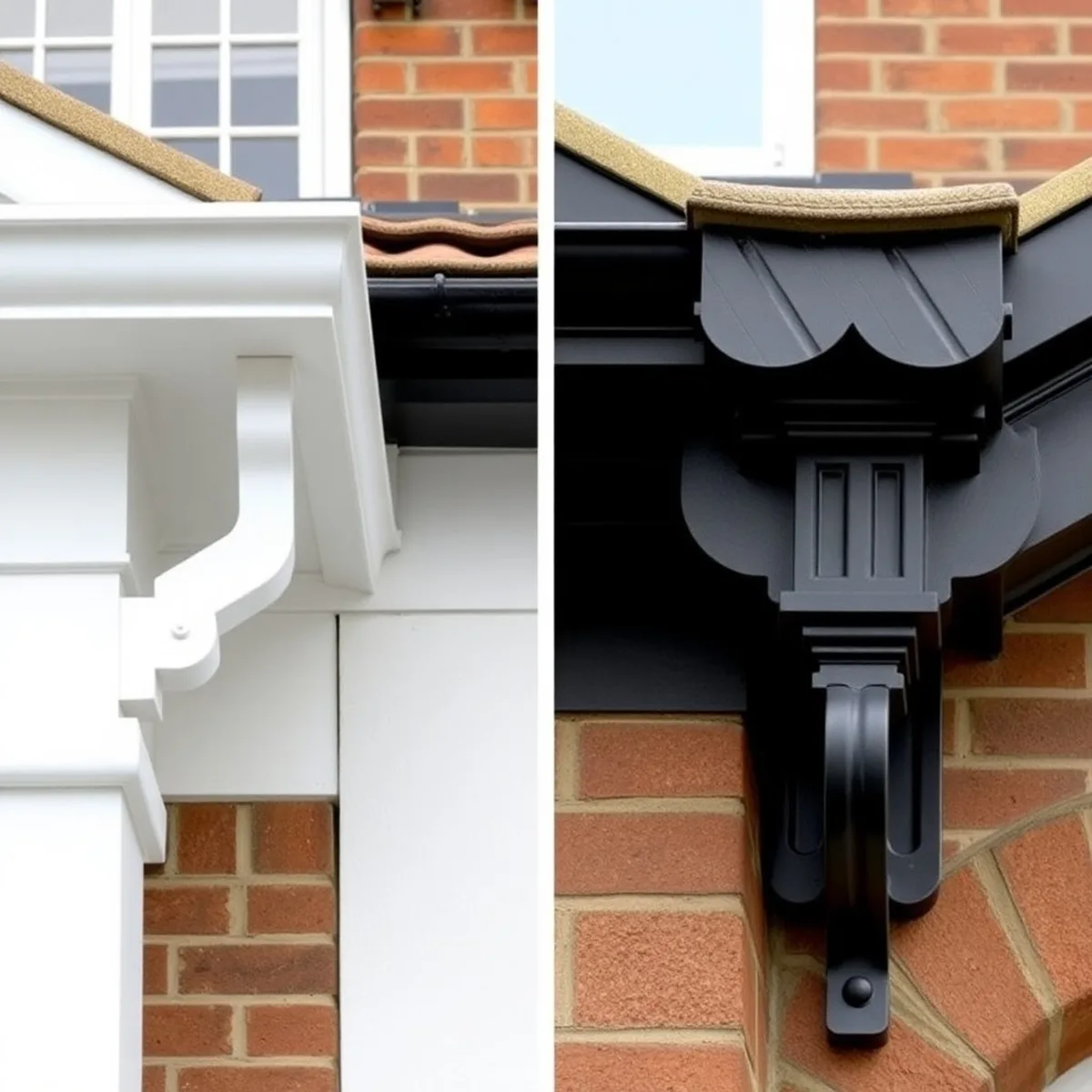
There’s no single winner in the plastic vs cast iron debate — the better gutter depends on your property. For most modern homes, uPVC wins on cost and convenience. For Victorian and Edwardian period properties, cast iron wins on character and longevity. This guide sets out the honest trade-offs so you can choose with confidence.
Because West London’s housing stock spans everything from pre-war villas to post-war semis, we fit both materials regularly. Here’s how they compare on the factors that actually matter.
The Quick Answer
- Choose uPVC if you want the lowest cost, minimal maintenance, and a clean modern look on a post-war or newer property.
- Choose cast iron if you own a period home where original character matters, and you’re happy to pay more upfront and repaint periodically in exchange for a system that can outlast you.
Now for the detail.
Cost: uPVC Wins Comfortably
uPVC is the budget-friendly option by a clear margin. Materials cost roughly £25–£45 per metre, and a full replacement on a typical semi-detached or detached home usually lands in the £400–£900 range.
Cast iron, by contrast, costs £50–£100+ per metre for the material alone. Additionally, it’s heavy — so installation needs stronger supports and more specialist labour, which pushes the total for a full system considerably higher than an equivalent uPVC job.
If budget is the deciding factor, uPVC is the sensible choice. However, cost per year of service narrows the gap, as the next section shows.
Lifespan: Cast Iron Wins on Endurance
A well-maintained cast iron system lasts 50+ years — plenty of pre-war properties in our area still carry guttering that has served for the better part of a century. uPVC typically lasts 25–40 years before UV brittleness and hardened joint seals bring it to the end of its working life.
In Hillingdon village, for example, some of the pre-war housing still has original cast-iron guttering running alongside various generations of replacement systems — a useful real-world illustration of just how long the material endures. Our Hillingdon page covers the local housing mix in more detail.
The catch is the phrase “well-maintained”. Cast iron only achieves its long lifespan if it’s looked after, which brings us to the next point.
Maintenance: uPVC Wins on Convenience
uPVC needs very little beyond routine debris clearing. It won’t rust, doesn’t need painting, and a twice-yearly clean keeps it healthy for decades.
Cast iron demands more commitment. Because bare iron rusts, the system needs repainting every 5–7 years to stay protected. Skip that cycle and corrosion sets in at the joints and along the back edge you can’t see from the ground — and rust damage is far more expensive to put right than a tin of paint.
Both materials, it should be said, need regular cleaning. Blocked gutters overflow regardless of what they’re made of, so debris clearing stays on the calendar either way.
Appearance and Character: It Depends on the House
On a Victorian or Edwardian property, cast iron simply looks right. The ogee and half-round profiles, the visible brackets, the painted finish — these details are part of the building’s original design language. Swapping them for plastic can visibly cheapen a period frontage, and on listed buildings or in conservation areas you may not have the choice anyway.
On a post-war semi or a modern build, the calculation reverses. uPVC’s clean lines suit the architecture, nobody expects ironwork, and the money saved goes further elsewhere. This is why we install uPVC on the majority of properties we visit — most of our service area is post-war housing where it’s genuinely the right fit.
Weight and Installation
Cast iron’s weight cuts both ways. It makes the system extremely stable — it won’t lift, rattle or flex in storms — but it also requires sound fascia boards, robust brackets and specialist handling during installation. Therefore, a cast iron job takes longer and involves more preparation than a like-for-like uPVC fit.
uPVC is light enough that installation is quicker and gentler on the fascia. That’s part of why replacement costs stay low.
A Brief Word on Aluminium
If you’re torn between the two, aluminium is worth a mention as the middle path. It won’t rust, lasts roughly 30–50 years, can be powder-coated in heritage colours, and needs far less upkeep than cast iron. It costs more than uPVC but less than a full cast iron system. For period-style looks without the repainting cycle, it’s a genuine option — we cover all three materials on our gutter replacement service page.
Frequently Asked Questions
Is cast iron guttering worth the extra cost?
On a period property, usually yes. It preserves the building’s character, handles heavy water flow well, and lasts 50+ years with maintenance. On a modern property, the premium is harder to justify — uPVC does the same job for far less.
Can I replace cast iron gutters with plastic?
Physically, yes, and many homeowners have. However, on listed buildings and in conservation areas there may be restrictions, and on any period frontage the visual change is noticeable. It’s worth getting advice before committing either way.
Which gutter material needs the least maintenance?
uPVC. It needs no painting and won’t corrode — just routine debris clearing. Cast iron needs repainting every 5–7 years to prevent rust, plus the same regular cleaning.
What is the best type of guttering for a UK home?
For most modern UK homes, uPVC offers the best balance of cost, lifespan and convenience. For period homes, cast iron (or powder-coated aluminium as a lower-maintenance alternative) better suits the architecture and lasts longer.
Weighing up materials for your own property? We’ll survey your existing system, explain the options honestly, and give you a free written quote with no pressure attached. Fill in our free quote form — we respond within 2 hours during business hours, Monday to Friday.
Related reading: How Long Do uPVC Gutters Last? | Can You Repair Plastic Guttering?
Tags:
Related Articles
Autumn Gutter Cleaning Checklist
A practical autumn gutter checklist for UK homes: check for leaf build-up, test downpipes, inspect fascias and book a clean before winter rain arrives.
Read more Tips & AdviceThe Best Time to Clean Gutters in the UK
Late autumn, after the leaves have fallen, is the best time to clean gutters in the UK — with early spring a close second. Here's why the timing matters.
Read more